
British Olympic canoeist Andy Train has been awarded an MBE (“Member of the Order of the British Empire”), one of the most prestigious awards in the UK, in recognition of his outstanding contribution to community paddlesport and social inclusion across Birmingham.
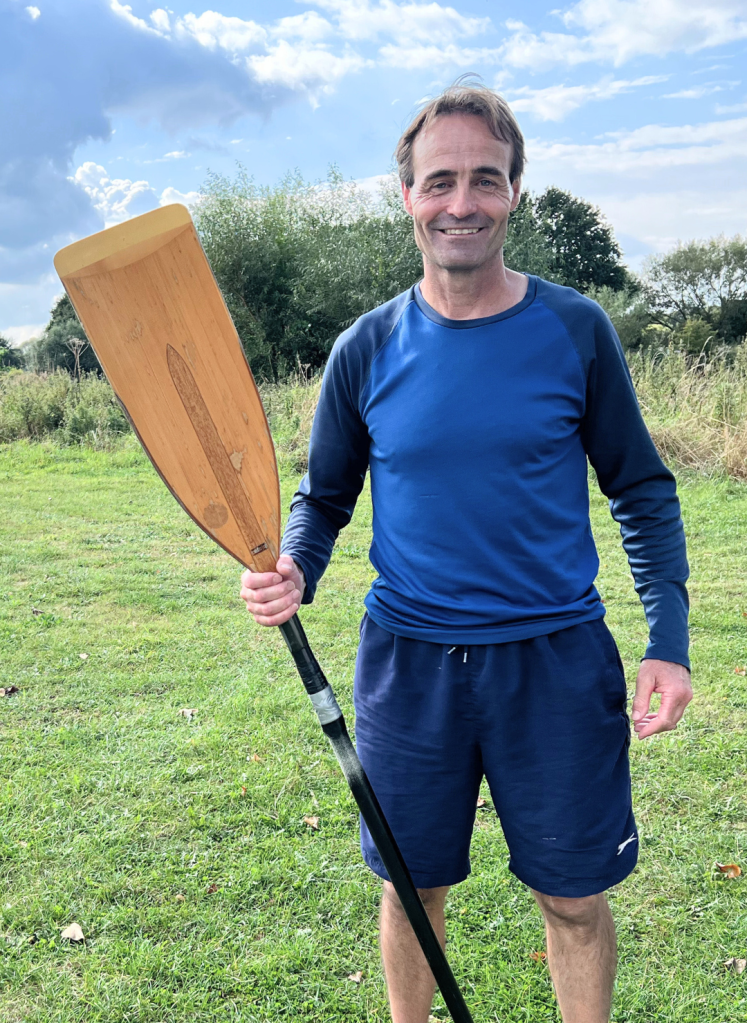
Along with his brother, Steve Train, Andy represented Great Britain at the Olympics five times from 1984 to 2000. In more recent years, he’s dedicated himself to helping under-served communities in Birmingham get onto the water. Andy has helped set up eight “hubs” with regular paddling programming in bell boats and kayaks, and helped start seven new locations for Aquapaddle. Across one paddlesports career, Andy has contributed to the most elite level of competition and the most entry-level of coaching.
A family legacy
In an interview with Paddle Daily in September 2024, Andy shared how his commitment to paddlesports is rooted in his family history and a strong belief in the power of communities over individuals.
Paddling and community were cornerstones of Andy’s life from his earliest childhood. Growing up in Worcestershire, he remembers a picture of himself at 3 years old sitting in a kayak on the lawn. A few years later in 1972, Andy’s father, David Train, founded Fladbury Paddle Club.
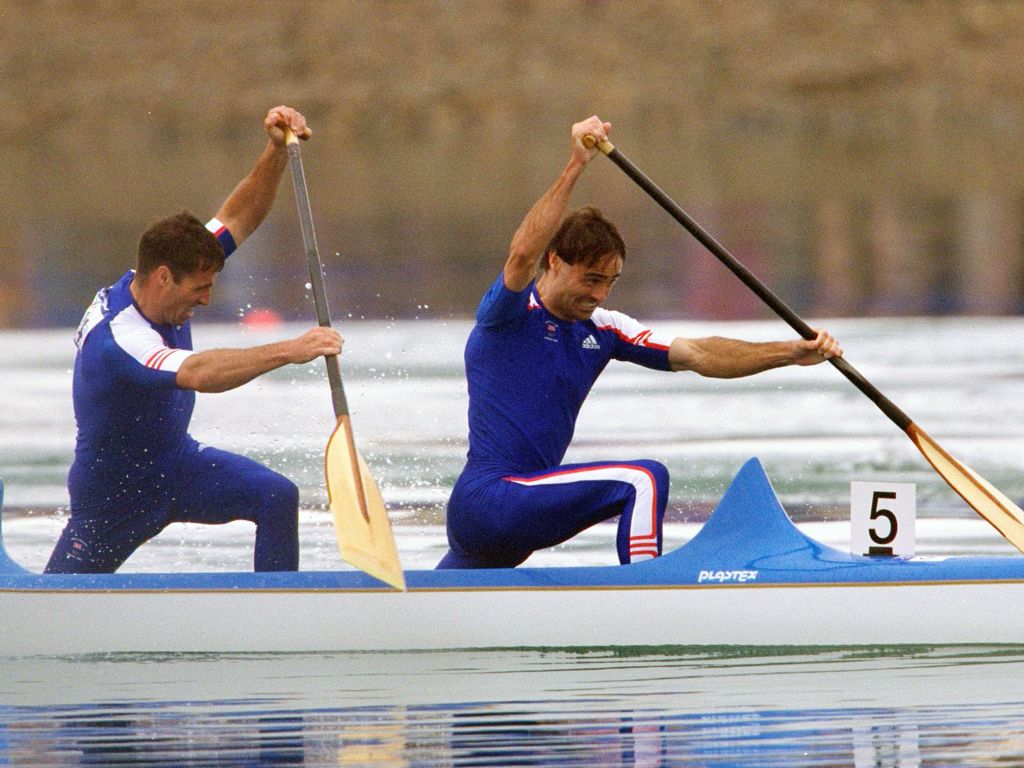
In the 1980s, Andy was getting faster and faster in both sprint and marathon canoeing. His first Olympics was in 1984, the last time the Olympics was held in Los Angeles. He raced the C2 500m with Eric Jamieson and the 1000m with Steve. Andy and Steve frequently found success as a sibling crew, and went on to win gold together at the first ever ICF Canoe Marathon World Championships in Nottingham in 1988, a feat they repeated in 1996 and 1998. Their father, David, was part of the team too: he was a canoe coach for Team GB for twelve years from the 1984 – 1996 Olympic Games.
But at the same time the Train family was celebrating success at the elite end of canoeing, David was getting worried about the state of society beyond the world of canoeing. Andy recalls that, with the rise of Thatcherism, “My dad was getting increasingly frustrated about individualism in society.” David became interested in the work of W. Edwards Deming, whose philosophies emphasized the importance of understanding the importance of systems in determining success or failure. One of Deming’s famous principles was to “Drive out fear.” In other words, an effective team has a culture of solving problems by looking at systems, rather than assigning blame to individuals.
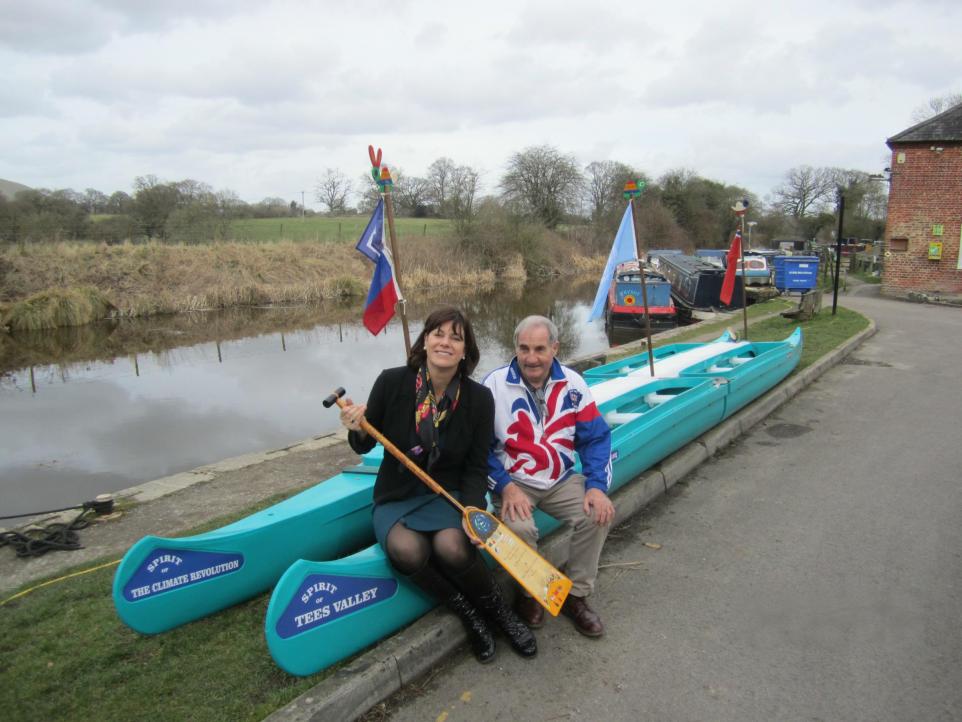
“My dad decided to express everything in a boat rather than writing it in a book,” Andy explains. And that was how David Train invented the bell boat. “In a team boat, it feels good if you’re all working together,” says Andy, who knows that from plenty of time racing at an elite level in the C2 as well as from his time in bell boats. Named “bell” after the bell-shaped “normal” curve in statistics, Andy says it’s about “taking out the problems in the process”.
With two hulls lashed together and seats for up to twelve people, the bell boats are not just an exercise in teamwork, but they’re one of the safest ways to get newbies out on the water. Reminiscent of the double-hulled V12 in outrigger canoeing, it was actually dragonboating that inspired David. The bell boats combine the safety of the double-hulled design with the accessibility of the dragonboat, and are frequently used by groups from Scouts to canoe clubs to this day.
Bringing paddlesports to the canals of Birmingham
Knowing Andy’s family history, it’s easy to see how he’s become such a pivotal figure in getting new paddlers onto the water, particularly those from backgrounds that are not well-represented in paddlesports. With support from the Paddle UK Stronger Together fund and other partners, Andy has spearheaded the Birmingham Community Paddlesports Project which launched in 2022. Andy says that before they were introduced to paddling, many of the kids in nearby schools didn’t even know the canal was there.
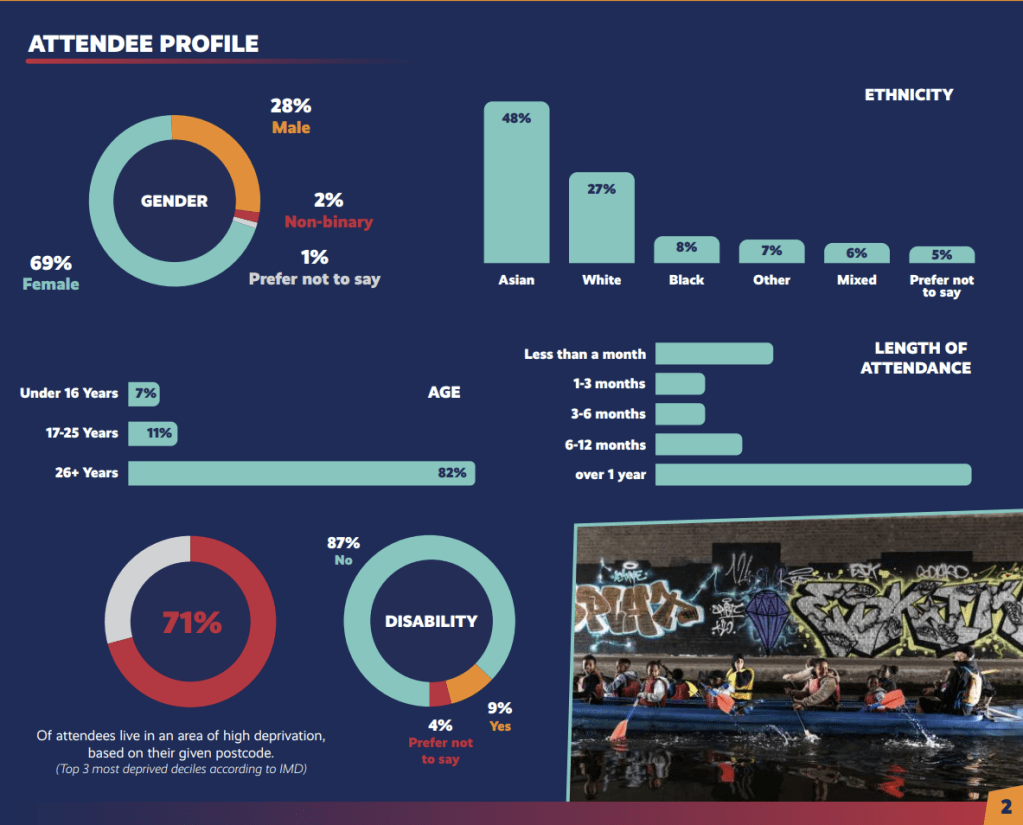
Andy’s results are incredible: as of 2024, Paddle UK reported that more than 1,400 young people had participated in the paddlesports project. On a 0-10 scale of “enjoyment”, the average score was 9.7. And 98% of participants said they want to continue paddling in the future. Those high scores came from a population massively underrepresented in paddlesports – 69% identified as female, and 73% as ethnicities other than White, mostly Asian.
Andy says the key for reaching new paddlers has been working through existing community groups. The 8 “hubs” of the project are largely centred around established partner organisations that already run consistent programming. One of those is Sähëlï Hub, started in 1998 by Naseem Akhtar “for women who wanted to engage in physical activities and take part in sports that were run by women.” Another is Aspire and Succeed, a community-led mission that was founded following the ‘Lozells riots’ of 2005 “to win change and shape the story of where we live.” Working with these existing groups makes it easy to scale paddling to numbers like the 1,400 referenced in the Paddle UK report, and the groups themselves have since been able to affiliate to Paddle UK as paddling clubs.
Andy offers a bit of advice for community members looking to replicate the success of the Birmingham programme: “Work with community groups that already exist. Don’t create something from scratch.” The other piece to this has been instructor training and building community competencies to make the paddling sustainable. Capable, confident, and local, it was the instructors who helped bring AquaPaddle to Birmingham.
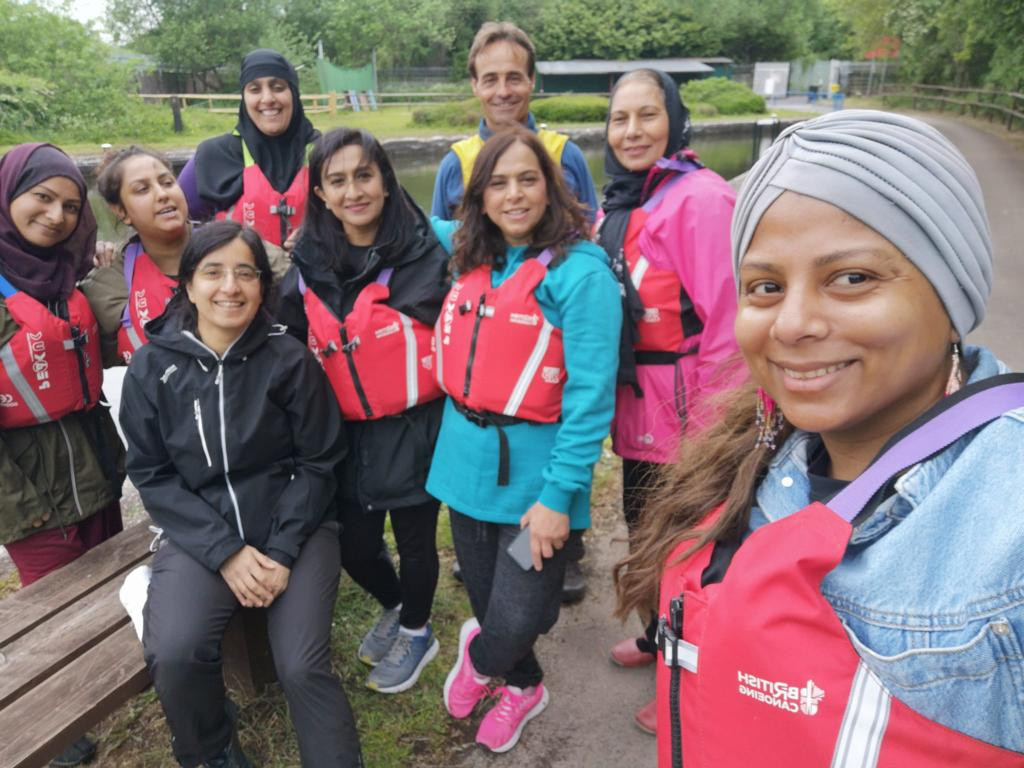
Introducing AquaPaddle to Birmingham
As the paddling scene in Birmingham matures, Andy says people have started asking him about racing: “There’s only one of me at the moment, so I’ve been giving them the input as adults to help other beginners and take those next steps into racing.” To go from introductory paddling straight into racing can be a big adjustment, so Andy says AquaPaddle is “a good step” in between.
Founded in 2021 by Ditton-based paddleboarding instructor Brett Scillitoe, AquaPaddle brings the ParkRun model to paddling. On Sundays around the UK, participants can show up to their closest location for a free, timed, 5 kilometre paddle. Just like ParkRun, it’s not a race. But it still attracts novice and experienced paddlers alike for the community building and time trial aspects of the event. It’s the ideal “not a race” entry point for racing-curious paddlers.
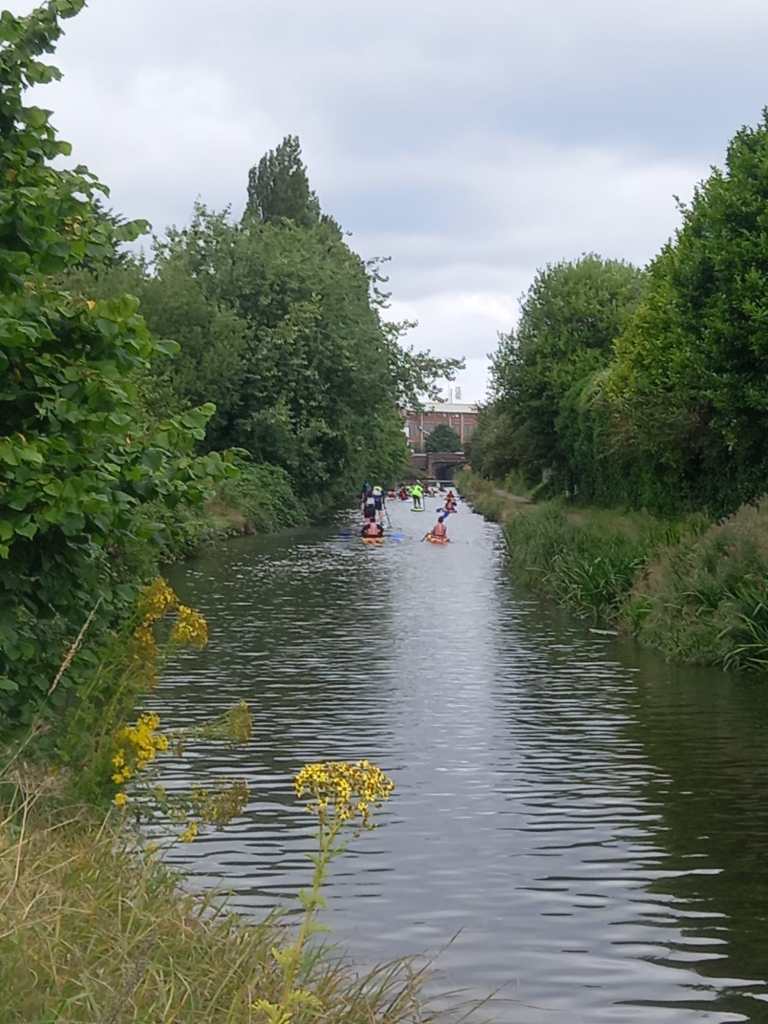
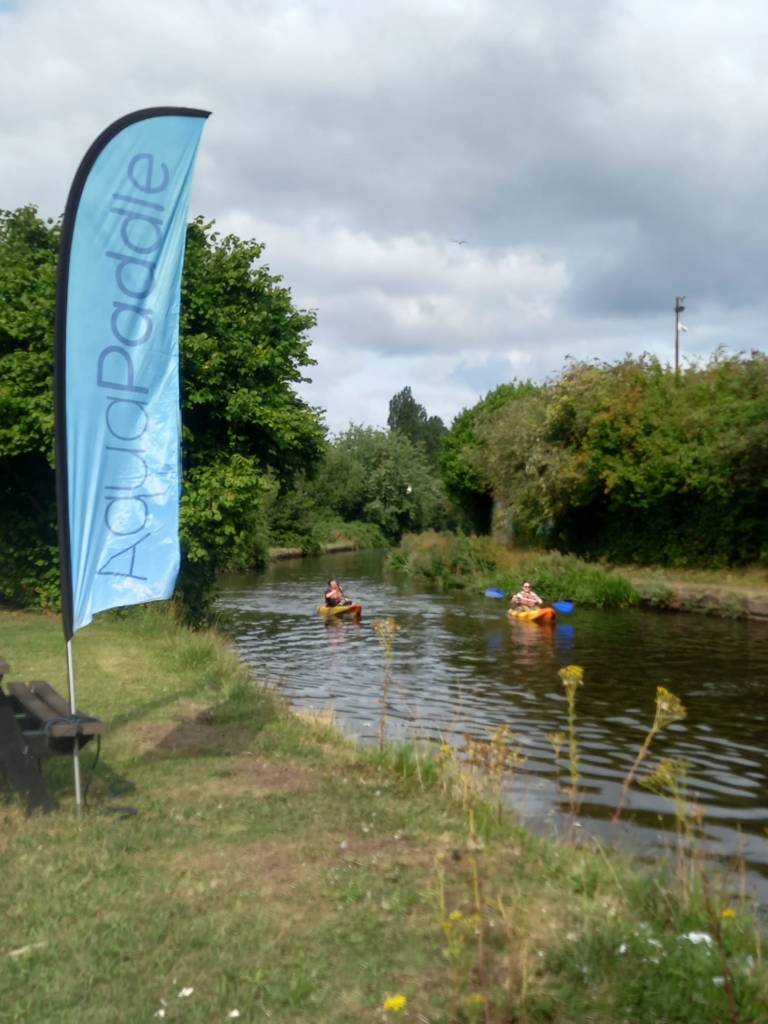
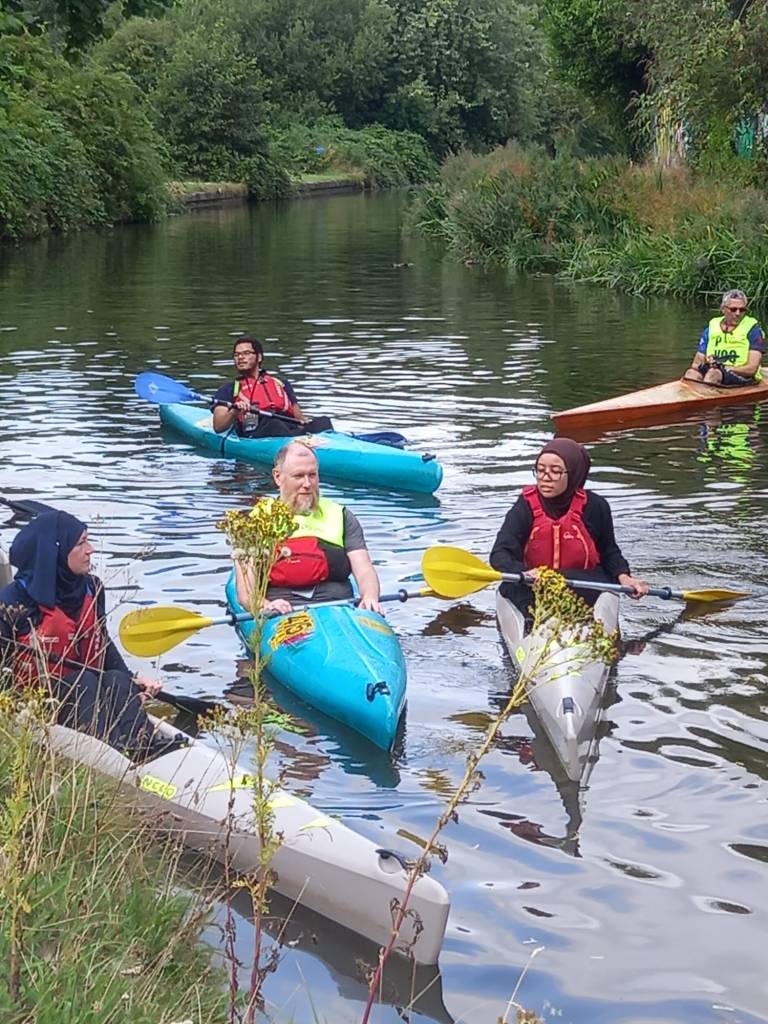
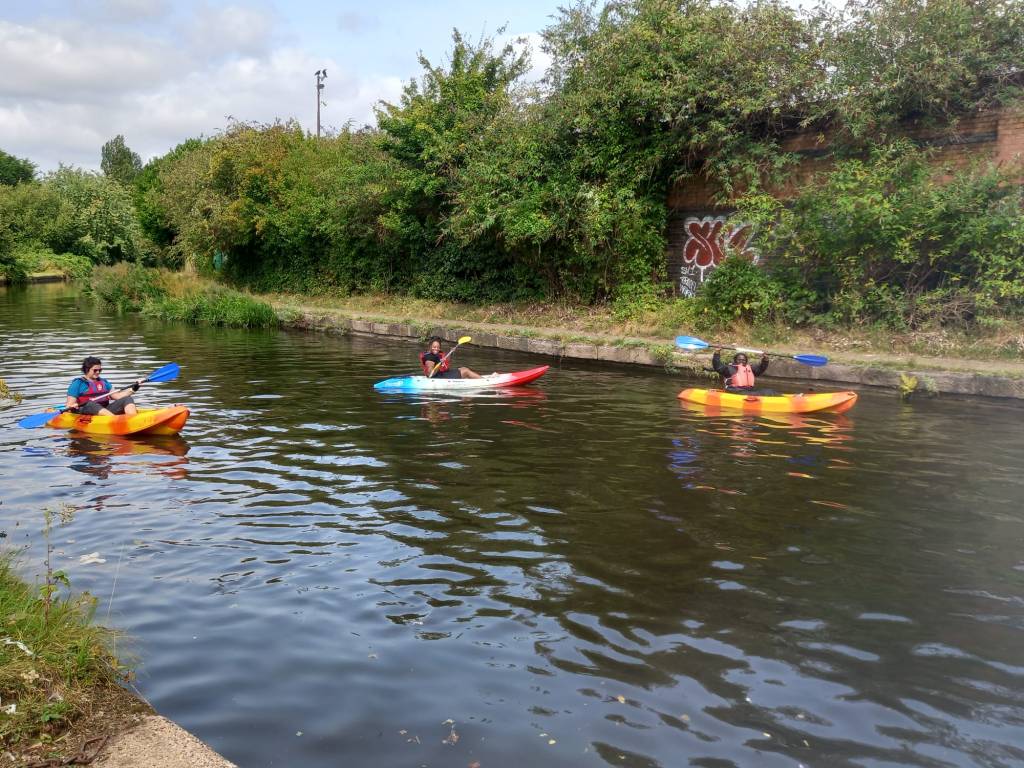
Brett says that Andy’s involvement in Aquapaddle has been the perfect fit because both are aligned in a philosophy of “helping people reach their personal best”. Since Birmingham hosted its first Aquapaddles in 2024 under Andy’s leadership, several locations are now being run directly by the local community groups who are part of the Birmingham Community Paddlesport Project. Those locations include Perry Barr, Small Heath (Ackers), and Castle Vale. Brett is looking forward to seeing Birmingham host more Aquapaddles in 2026, saying: “My aim is to bring as many people together from as many diverse backgrounds as possible. Because once you start paddling together, you break down the barriers.”
In just five years, AquaPaddle has grown to more than 40 locations around the UK with more than 3,000 paddlers having participated in an AquaPaddle. By partnering with Andy and the the local Birmingham paddling hubs, those numbers are sure to keep growing.
“His impact goes far beyond the water”
Beyond his work in Birmingham, Andy remains an integral part of the UK racing scene. A few minutes after wrapping up his interview with Paddle Daily at the 2024 MacGregor Inter-Club Sprint Regatta in Nottingham, Andy rushed off to get ready to race C4 for Fladbury.
While the number of high kneelers in the UK has fizzled since Andy represented Team GB at five Olympic Games, he remains one of the stalwarts of the sport and coaches both canoeists and kayakers at Fladbury Paddle Club. Speaking for the self-titled “Fladbarians”, club member George Conroy says: “Andy Train is more than a coach – he’s a mentor, a friend and one of the most humble men any of us have ever met.” George says that Andy encourages every club member to push themselves to achieve goals both in paddlesports and outside of the paddling world, and leads by example with the line: “Don’t let grandad Andy beat you.” George says that he and other club members appreciate Andy’s “genuine kindness and unwavering belief”. For those lucky enough to know Andy, his impact “goes far beyond the water.”
Additional reporting on Andy Train’s MBE has been published by the BBC and other news outlets: Paddle UK, BBC Video, BBC Article, Evesham Observer
 Paddle Daily
Leave a comment