
It’s finally official: the International Canoe Federation is rebranding itself as “Paddle Worldwide.” The plan has been in the works for months (at least), and member federations officially approved the new name this week at the ICF Congress in Antalya, Turkey. With the move from “canoe” to “paddle”, the ICF follows in the footsteps of several national governing bodies including Paddle Australia (2018) and Paddle UK (2024). Paddlers worldwide are wondering what the rebrand actually means for them.

Inclusivity has been the stated impetus in each governing body’s rebrand: paddlesports are more than just canoeing, and it’s time to unify the various sports under a broader term. In Britain, Paddle UK was more explicit about their rationale. Their membership more than doubled over the pandemic and all of a sudden, more than half of their members listed an interest in stand up paddleboarding (SUP). A generous reading of the rebrand would say that it’s a step forward for global standardisation of paddlesports, and should help bring numerous disciplines together. Beyond thinking across craft and sport, the ICF emphasised the importance of thinking about paddlesports across different types of water: from lakes, to rivers, to seas, and using the combined cross-paddlesport power to advocate for waterway preservation. More sports under one umbrella means more shared resources, better consistency, and generally better organisation. A rising tide lifts all boats (and boards), right?
A slightly more cynical view might look a bit closer at why SUP is such a tasty morsel. Let’s be honest – the ICF isn’t rebranding because kayakers felt excluded by the term “canoe”. If that was the case, it’d be weird to wait 100 years before rebranding. As the world’s fastest growing water sport, SUP represents a massive market of paddlers that only grew faster over the pandemic years. But the ICF’s governance claims over paddleboarding have been rocky at best.
The Battle of the (Stand Up) Paddle
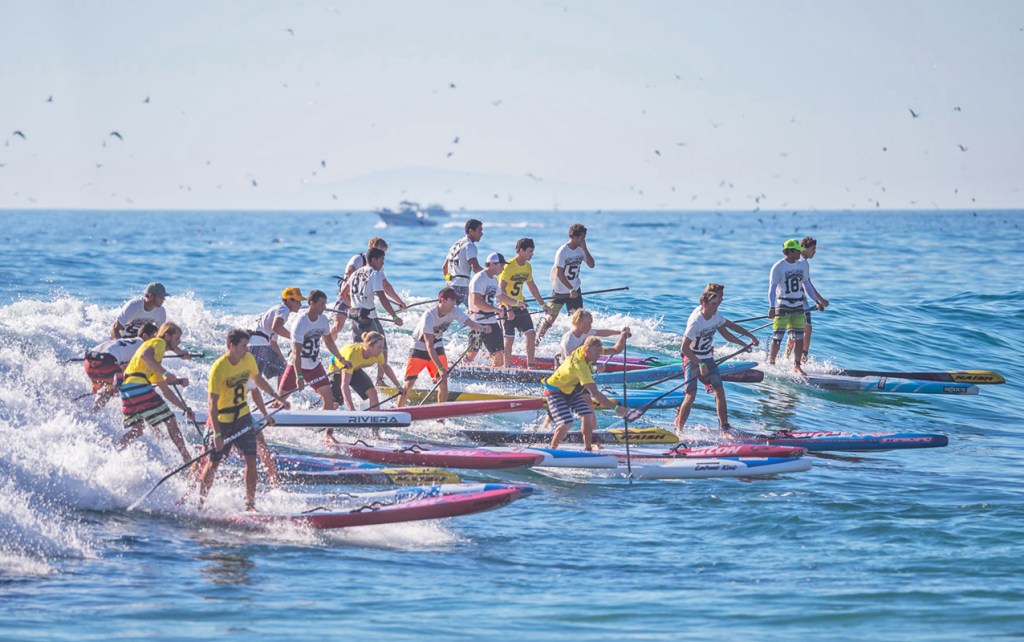
In 2020, the ICF went to battle against the International Surfing Association (ISA) in the Court of Arbitration for Sport. Sure, SUP uses a paddle just like canoeing or kayaking, but it was SUP surfing by Laird Hamilton and Dave Kalama in Hawaii that led to the mass popularisation of modern SUP. The ISA ran their first SUP World Championships in 2010, while the ICF caught on much later: the ICF SUP World Championships only started from 2019. Initially, SUP athletes were thrilled by the entrance of the ICF which brought huge improvements in organisation and professionalism to their events. More recently, the ISA has improved their professionalism as well, probably pushed by having to compete with the ICF and buoyed by having surfing (sans paddle) added as an Olympic sport since the Tokyo Olympics.
In 2020, the court officially ruled that the ICF would be allowed to develop the sport of SUP, but that the ISA would “at present, be the relevant governing body for SUP at Olympic level.” Both organisations continue to run competing world championships with similar event programmes. The ISA has attempted, unsuccessfully, to get SUP into the Olympics and says they’ll still “promote and present this opportunity for the Brisbane 2032 Olympic Games.” But that doesn’t mean the ICF won’t make their own play for it. Rebranding to “Paddle Worldwide” won’t be enough on its own, but it certainly helps make the case that the multi-billion dollar market of stand up paddling belongs under the Paddle Worldwide umbrella.
What’s next
According to the ICF, their Paddle Worldwide rebrand won’t go into effect until 2026. But the rebrand is part of a bigger strategic reset with some changes happening much sooner. The ICF is opening a new headquarters in Hungary, while maintaining their presence in Lausanne, Switzerland (the Olympic capital) and Hangzhou, China (opened earlier this year). They’re growing the number of staff in China this year and will aim to hire 15 new staff in Hungary which will triple the size of the global team. Hungary has arguably been the unofficial capital of paddlesports, certainly on the sprint side, for long enough that having an ICF office there feels like an obvious choice.
Speculatively, we may see more national governing bodies announce their own rebrands to swap “canoe” for “paddle” or “paddlesports”. The ICF may pressure them to make the change to align globally, or organisations may choose to rebrand based on their own national dynamics like we’ve seen in Australia and in the UK. We may also see the ICF use this rebrand to push harder in growth disciplines like Canoe Ocean Racing and Dragon Boat. Similar to SUP, the governance of these disciplines is a bit fuzzier. The ICF has run an ocean racing World Championships primarily for surfski since 2013, but the events also include outrigger canoeing and SUP which have competing events held by the International Va’a Federation and International Surfing Association. The ICF has hosted several Dragon Boat World Championships since at least 2016 and even held a few demonstration dragon boat races at the Paris 2024 Olympics, but they continue to compete with the more widely recognised and respected International Dragon Boat Federation.
Most likely, SUP will remain the primary growth focus of the ICF (at least outside of their seemingly successful launch of kayak cross in the whitewater realm), and probably not invest too much more into the smaller paddling disciplines that have competing governing bodies. That said, it might be nice to see a bit more from the ICF in promoting surfski kayaking: next year’s world championships in Durban are in the surfski capital of the world; surfski is growing quickly and has huge growth potential; and the ICF doesn’t have to battle it out for governance with another organisation. Plus, there’s already heavy crossover with sprint and marathon athletes including Olympians Fernando Pimenta and Hank McGregor competing in both flatwater kayak and surfski.
The good news for paddlers is that our international governing body seems to be doing well and committed to growing paddlesports worldwide. How exactly that will play out, including whether SUP has an Olympic future with the ICF, remains to be seen.
 Paddle Daily
Leave a comment