
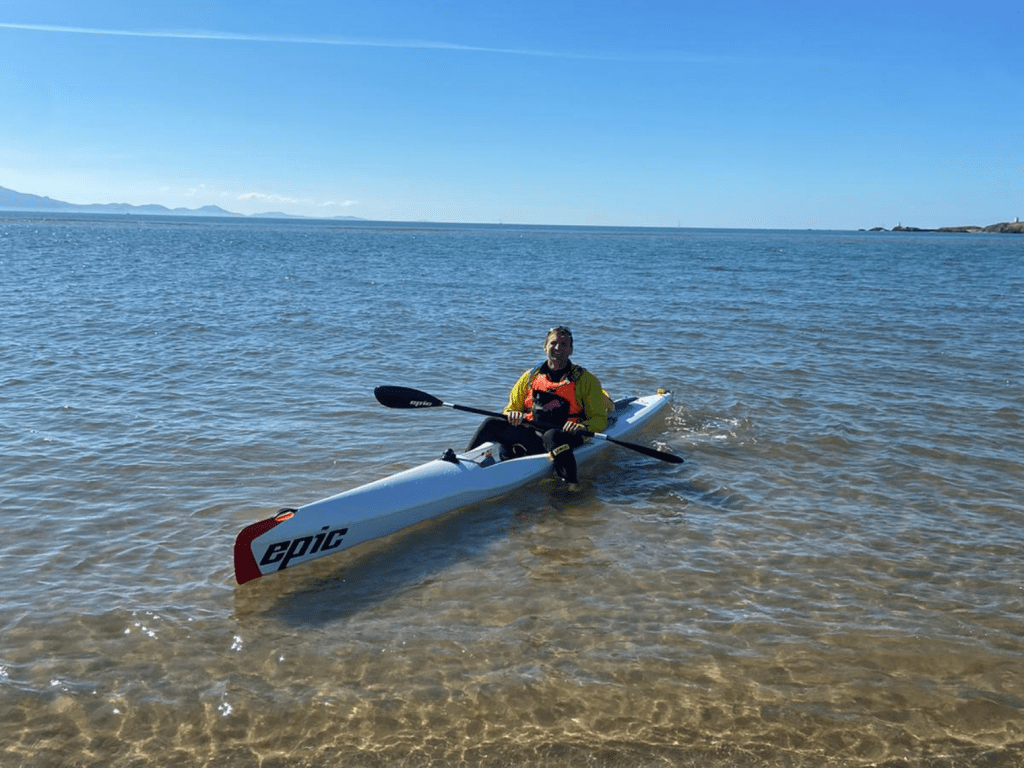
At the top of Wales, north of Snowdonia, across the Irish Sea from Dublin, lies the island of Anglesey. To the average tourist, it’s known for its history (Romans, druids, pirates, Vikings!) and unspoilt beauty. But to the record-chasing ocean paddler, Anglesey is known for its multiple tidal overfalls, miles of rocky cliffs, and the treacherous Menai Strait.
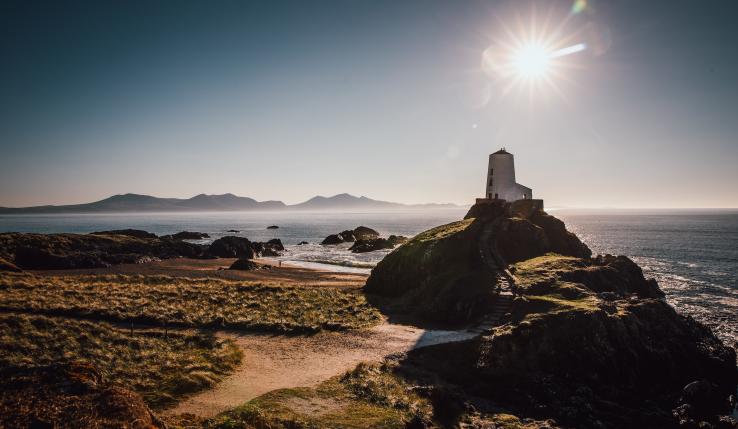
“The crown jewel of British sea kayaking”
John Willacy, the paddler behind Performance Sea Kayak, has held the record for the fastest kayak circumnavigation of Anglesey since 2005. It was momentous for him at the time, the very reason he started Performance Sea Kayak. Since that first record when he took 2 hours off the previous record (from 13 hours 36 minutes to 11 hours 30 minutes), John has returned fifteen times to ensure he kept the record. In John’s words: “This was the one that set them all off for me, my first record – the genesis of Performance Sea Kayaking.”
Billy Butler first thought about it late last year. He’d done a lap of the Isle of Wight, taking the record there in 6 hours, 28 minutes. Billy’s time cut down John Willacy’s record by more than thirty minutes. But then someone said “Anglesey is the real one”. Circumnavigating Anglesey had even been called “the crown jewel of British sea kayaking.” For Billy, it quickly became an obsession. He buckled down and started looking at tide charts.
The window for breaking the record would be very tight. Sure, Billy would be fast in his surfski, but the conditions around Anglesey are the kind of conditions that don’t care how fast you are, by kayak or even by ship. The Menai Strait, between the mainland and the island, is one of the worst stretches. The strait has “some of the strongest tidal races in the world”, with the added challenge of physical obstacles: “The area is peppered with rocks and islets which create obstacles in themselves as well as associated swirling currents and whirlpools. These include the Swellies; a notorious wrecking site.” More than 100 ships have met their final fate around Anglesey with shipwrecks recorded as far back as the 16th century. In 1953, the wreck of the school ship “HMS Conway” proved how dangerous it can be to miss the narrow tide window of the Menai Strait.
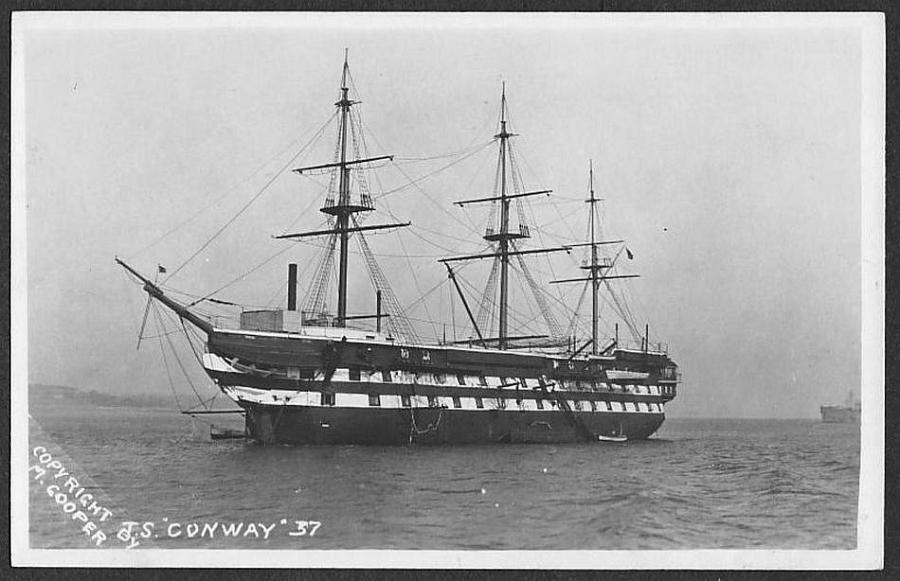
“The Swellies” steal a ship
It was 14 April, 1953. Looking at the tides that day, local practice recommended starting to tow the boat from Britannia Bridge toward Menai Bridge (“the Swellies”) at 8:48am. The ship arrived at Britannia Bridge at 8:50am. But instead of proceeding ahead as local practice and the pilot advised, the captain held the ship for 30 minutes. They needed a slack tide to get the ship through, but “slack” in the Swellies isn’t a traditional tide where the water reaches its low point, it’s completely unstressed, and then takes time to build a flow back up. In the Swellies, the point where the water is calmest and “slack” isn’t a true slack: it’s described as “a brief period of uneasy equilibrium between two opposing flood streams.” So even the optimal point for transit through the Swellies isn’t exactly ideal. And by waiting 30 minutes, the HMS Conway had missed it.
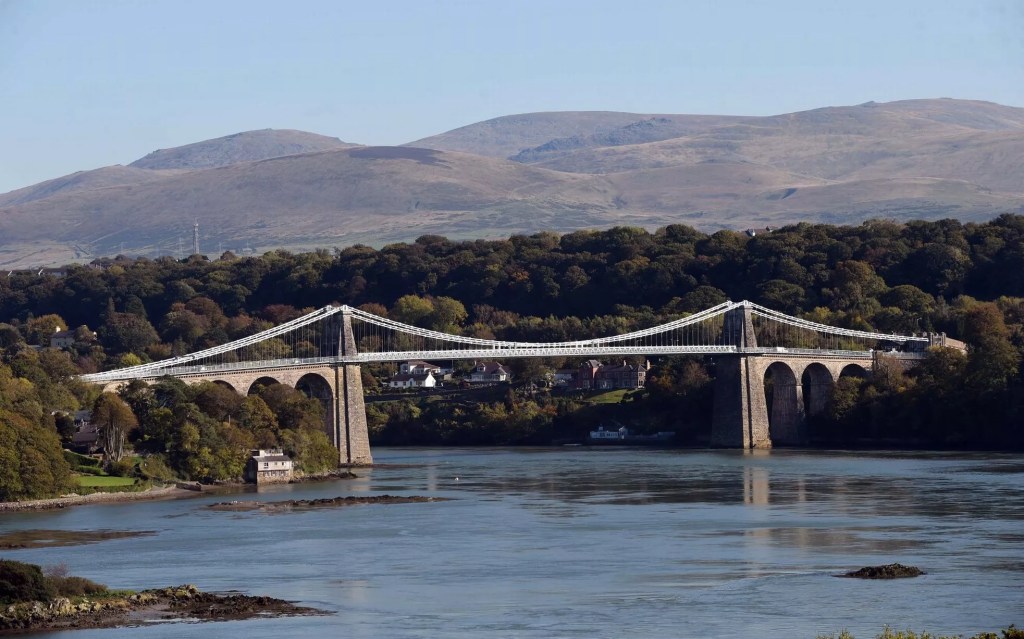
The forward tugboat started pulling the Conway under the bridge, against the tide. 47 minutes later, they’d hardly made any headway. The captain sent a second tug, and the boat inched forward at what was now a slow, but noticeable pace. The ship made it into an eddy just 230 metres from Menai Bridge. The pilots wanted to hold the boat in the eddy, but the captain insisted they put it back into the channel. Almost immediately, the ship was caught by an eddy so strong that it drove the ship ashore. The account reads: “This disastrous sheer occurred, and was concluded, in a matter of seconds.”
“There aren’t many escape routes”
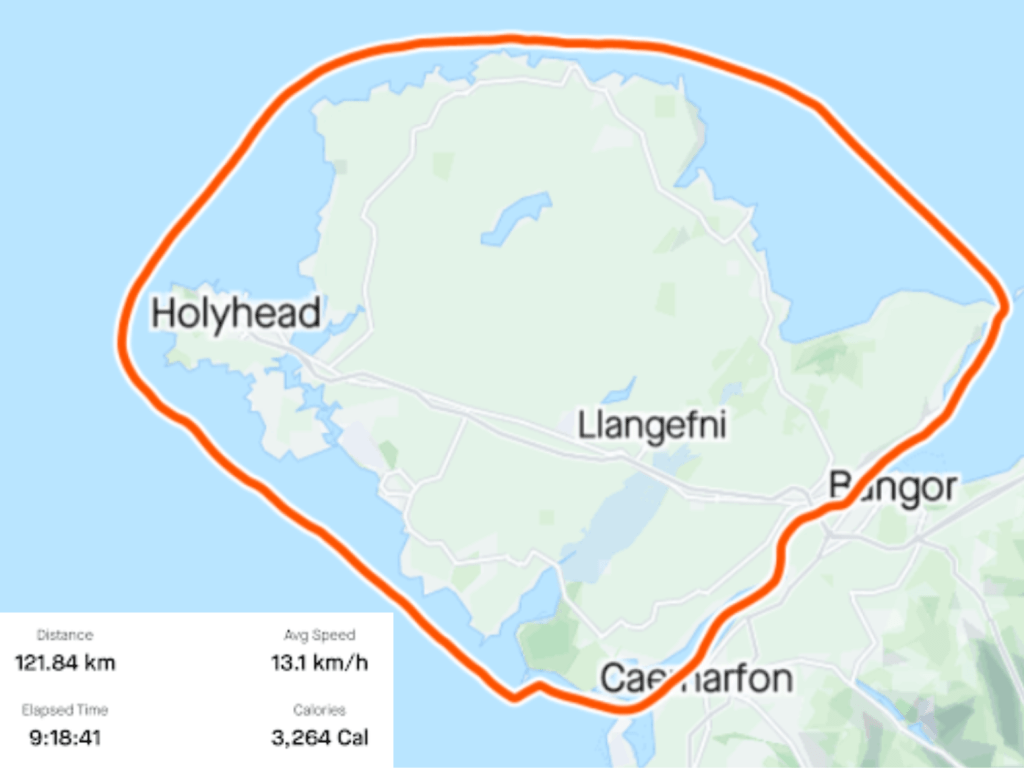
These are the types of conditions that Billy would face in the Menai Strait, and the strait would be just 25 kilometres of the 122 kilometre circumnavigation. If things went south for Billy during his attempted circumnavigation, he could get stuck between a rock and a hard place very quickly. The rock being the cliffs and rocky shores along the island’s north coast. The hard place being an unforgiving sea. It was nothing like his circumnavigation of the Isle of Wight last year. Billy says: “I was so chilled going around the Isle of Wight. I rang the Coast Guard, and I was like, if there’s any problems, I’ll just turn left [and go to the shore].” But on Anglesey, Billy knew it was a different kind of beast: “there aren’t many escape routes.”
Being so close to shore during a circumnavigation of Anglesey, you might think it’s easier than an open sea crossing where you’re out in the middle of open ocean with no shelter or backup. But Billy said he would take on a crossing, even a massive one like the Irish Sea crossing, with much more confidence than going around Anglesey: “You might get some waves, but they’re not going to be breaking. Around Anglesey, there’s breaking waves, nasty tide races. There’s plenty of places where it gets pretty horrible. You can get chucked out your boat in the Swellies in the Menai Straits. And if you get your tides wrong, you’re going against a tide that you can’t paddle against.” Only 15 other paddlers have circumnavigated Anglesey in less than a day, according to Performance Sea Kayak. Becoming the first surfski to do so, and finishing in under 9 hours 24 minutes wouldn’t be easy.
Planning tides: would the weather hold?
With such difficult and complex conditions around Anglesey, it’s not the kind of circumnavigation you can do on a whim. There would be only 40 days in the year that would have enough tide to break the record, and Billy was looking at all of them. In addition to tides, the swell and wind would be key factors. Billy kept watching the weather as the UK was experiencing an exceptionally cool late spring and early summer – the same weather that had Mike Lambert fighting low temperatures and brutal headwinds on his circumnavigation of the UK earlier this year. Billy thought May would work, the tides were particularly favourable… But no, as the date approached, conditions got too rough to be safe. There had been 4 recorded circumnavigations in 2023, and 5 in 2022. But August came and went, and no one had gone around Anglesey. Finally, September arrived. Two weeks out from the spring tide, Billy saw some favourable weather conditions on the long range forecast. It looked promising…
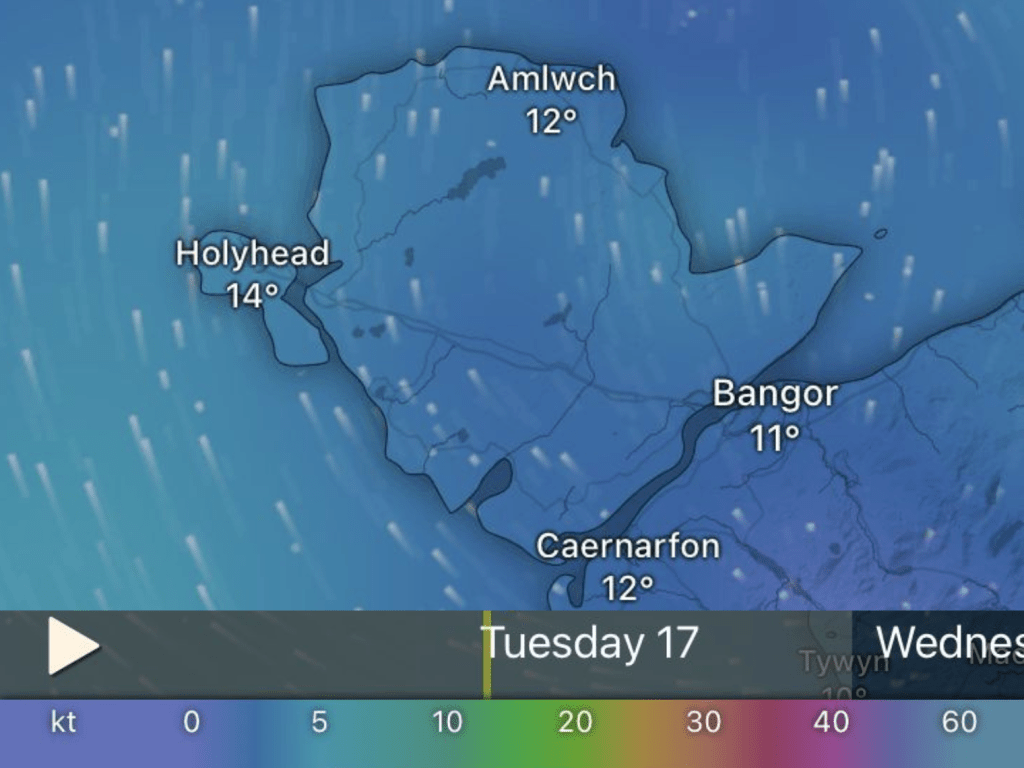
Billy knew he had to be ready to go as soon as he had a window. Tuesday or Wednesday was looking good. And then the weather forecast changed: Tuesday and Wednesday’s predicted conditions deteriorated. On Sunday night, Billy made the final call. He’d make the attempt the next day on Monday night – well, technically Tuesday morning.
The circumnavigation
Billy carried his surfski to the beach with little light to guide him. He set off at 2:38am to catch the tides, and headed west. He knew he could sit in the boat for 9 hours, he knew he could do 120 km, but he didn’t know whether he could get round the north coast. As he approached South Stack, it was still dark. He’d picked the best day he could, but even on the calmest day, the sea could be big. Billy got lucky: “They were hardly waves… no more than 12-18 inch waves.” Things were going well, even better than expected.
Billy continued around Holyhead, along the north coast, and past Point Lynas. He crossed Red Wharf Bay and took a tight line around Trwyn Penmon Point. Next up: Menai Strait. As Billy got further, the tide didn’t do quite what he was expecting. He knew the good tide wouldn’t last to the finish, and the bad tide would slow him down significantly. He started redoing the calculations for the record. Earlier in the circumnavigation, he’d stopped for a minute to film a pod of dolphins surrounding him. At the time, he thought he’d be well under the record. Now he was regretting the stop.
Billy had been pushing hard the whole time, particularly off the start when he was against the tide, but the clock was ticking and his margin on the record was looking less and less certain. With 10 km remaining, he ramped up his pace. He’d been following the GPX the whole time, and was pretty sure he’d followed it closely enough that the distance would be 122 km. He could see the finish point, but it was impossible to know exactly how far it was – what if he’d added distance at some point without realising it, and had an extra kilometre remaining? With four kilometres left (he hoped just four), Billy started sprinting. At least as much of a sprint as he could manage after 9 hours of paddling.
Finally, he finished where he’d started. He was pretty sure the record was his now, but he’d have to go back to double check the GPS data because at first it looked like he only had a minute to spare. Billy was exhausted – he’d done the whole thing alone from start to finish, and that 4 km sprint at the end didn’t make it easy to load his kayak back on the van and head home.
A new record
The official final time is pending GPS review by John Willacy of Performance Sea Kayak, but it looks like 9 hours, 18 minutes, 24 seconds. Six minutes faster than Willacy’s best time from 2014. In a post on Facebook while Billy was on the water making his attempt, Willacy wrote about his long journey with Anglesey: “It challenged, it tested. And it taught me so much. It was even the catalyst for a new boat, and a new website. But perhaps now it is time to hand it over… And if anyone is going to take it, then Billy Butler is the likely one.” Willacy may be ready to hand over the record, but he plans to keep doing laps. He’s done 15 circumnavigations of Anglesey so far, and wants to get to 20 eventually. Billy and John celebrated Billy’s new record over afternoon tea on Tuesday.
Paddling round Anglesey has attracted curious and ambitious paddlers for decades. Although the records in Performance Sea Kayak are likely not complete, Willacy has tracked circumnavigations going all the way back to 1971/2. That’s when Alan Hughes, Don Roscoe, and Ken Rudram are thought to have completed the first kayak circumnavigation of Anglesey. Their time is unknown, but a group of three in 1973 completed their circumnavigation in 18 hours. As far as is recorded, the team of Justine Curgenven and Fiona Whitehead were the first “modern” circumnavigators as they completed theirs in 2002. Barry Shaw went round solo in 2003, and set the record that John Willacy became determined to beat and started his journey with Anglesey. Justine Curgenven returned ten years after her first circumnavigation with Fiona to set the women’s solo record, which stands at 10:08:47. Fiona went on to become the first and fastest known solo paddler to circumnavigate the entire mainland UK plus Ireland. There’s no record yet of a women’s surfski circumnavigation of Anglesey, as Billy seems to have been the first to go round in a ski.
What’s next
Billy is happy to have the record, but he’d love to see more paddlers go after it. In particular, he thinks Dougal Glaisher (current record holder for the fastest circumnavigation of the UK by kayak) would have a very good shot at it. For the women’s record, Brynde Kreft could be the top candidate. She’s the fastest surfski woman in the UK right now, headed to Madeira in a few weeks to represent GB at the ICF Canoe Ocean Racing World Championships. Brynde also raced the Thames 200 Ultra as part of a relay team, and is looking for a partner for the 125 mile Devizes to Westminster next year, so 9-10 hours paddling won’t be a stretch for her.
For anyone considering the record, both Billy and John will warn you that the circumnavigation is about a lot more than being fast. “You need the sea skills, you’ve got to be able to read the tide well… You’ve got to put it all together – sea skills, spring tide, weather…” Getting that perfect combination including skill and luck is why John’s records have stood so long. Willacy said: “Contrary to most opinion, it’s not just about paddling hard. Yes, you need a certain physicality, but there’s more to it, much more. To get a good time you need good paddling skills, self-reliance, planning ability, determination and good lines of course. But above all you need to have a good understanding of the tides, that’s the decider really.” Surfski seems to be growing in the UK, so perhaps Billy’s record will kick off more speedy circumnavigations of Anglesey in the coming years.
And for Billy? He doesn’t have another circumnavigation in mind yet, but with his upcoming move to the Netherlands, he’s keeping busy with a “farewell tour”: the Belgian Coast Race (28 Sept), Krumlovsky “Cesky Krumlov” descent race (12 Oct), and the Ardeche (8-10 Nov). Plus a possible trip to Galway for an Irish fjord race, and a descent of the River Exe at some point. And after the move? Billy has his eye on a crossing, one crossing in particular. He’s said that he will “definitely” paddle from the Netherlands to Suffolk. Moving across the North Sea certainly won’t keep Butler from chasing more records.

 Paddle Daily
Leave a comment