
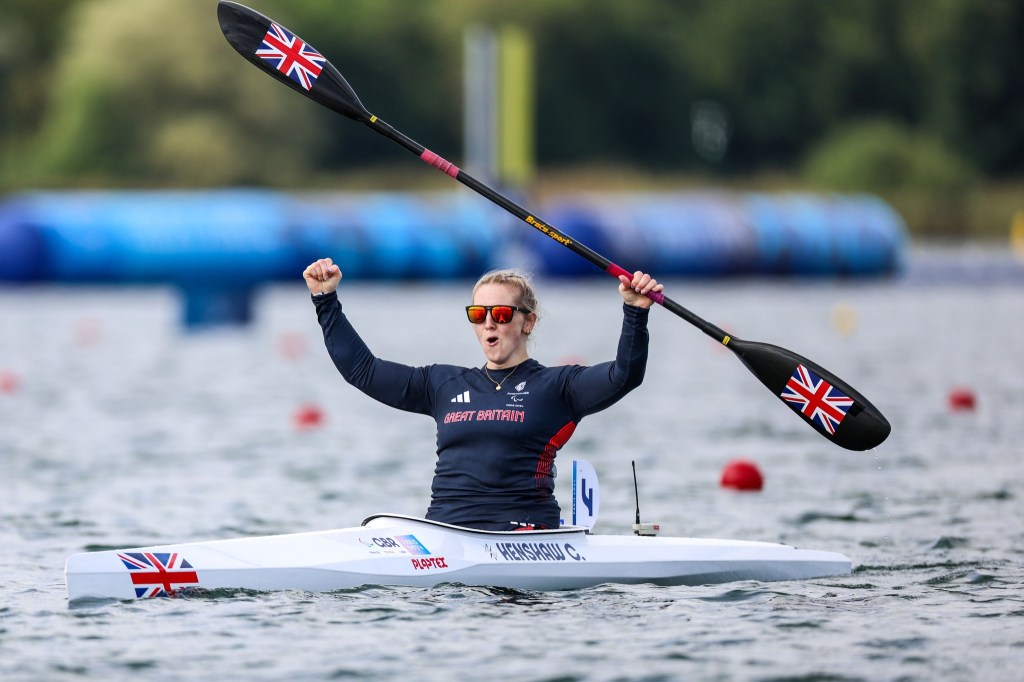
Paracanoe may only be in its third Paralympics, but it’s already exploding in popularity. From 136 entries at the 2019 Paracanoe World Championships before Tokyo, there were 212 entries at this year’s Paracanoe World Championships in Szeged: an increase of more than 50% over four years. Va’a (canoe) was added to the Paralympic programme in Tokyo 2020 and has been one big driver of this growth, though the Paralympics still has more kayak events than canoe. With increasing participation has come increasing competition, and the record times are starting to drop.
Dropping para times
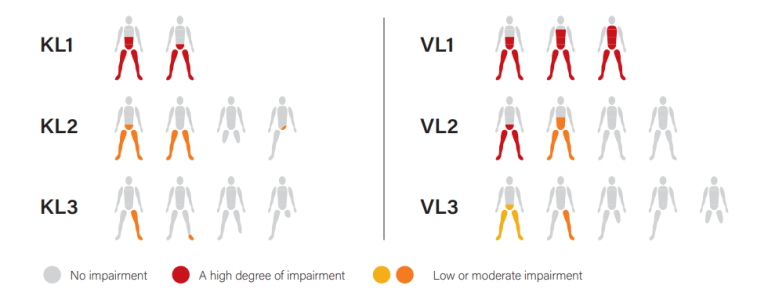
The Paralympic record times are slowly creeping closer to non-para racing times. Fans in Paris saw 7 new best times set across 10 events. Each paracanoe class corresponds to kayak or canoe (va’a) and level of impairment: “k” for kayak, “v” for va’a (seated Polynesian canoe with an ama); and L1/L2/L3 represents a different degree of disadvantage in the boat. Lower numbers (L1) indicate a higher degree of impairment (i.e., KL1 athletes have no or very limited trunk function and no leg function and typically need a special seat with high backrest in the kayak) where higher number (L3) indicate a lesser degree of impairment (i.e. KL3 athletes have trunk function and partial leg function, are able to sit with their trunk in a forward flexed position in the kayak and are able to use at least one leg or prosthesis.) Records currently stand at:
| Class | Paralympic Best Time | Record Setter | Location | Date |
|---|---|---|---|---|
| Kayak Single KL1 | 51.95 | Katherinne Wollermann (CHI) | Paris, France | 8 September 2024 |
| Kayak Single KL2 | 49.07 | Charlotte Henshaw (GBR) | Paris, France | 8 September 2024 |
| Kayak Single KL3 | 46.66 | Laura Sugar (GBR) | Paris, France | 8 September 2024 |
| Va’a Single VL2 | 57.02 | Emma Wiggs (GBR) | Tokyo, Japan | 3 September, 2021 |
| VL3 | 55.70 | Charlotte Henshaw (GBR) | Paris, France | 7 September 2024 |
| Class | Paralympic Best Time | Record Setter | Location | Date |
|---|---|---|---|---|
| Kayak Single KL1 | 44.55 | Peter Kiss (HUN) | Paris, France | 7 September 2024 |
| Kayak Single KL2 | 41.13 | Curtis McGrath (AUS) | Tokyo, Japan | 3 September 2021 |
| Kayak Single KL3 | 39.81 | Serhii Yemelianov (UKR) | Rio de Janeiro, Brazil | 15 September 2016 |
| Va’a Single VL2 | 50.47 | Fernando Rufino de Paulo (BRA) | Paris, France | 8 September, 2024 |
| VL3 | 47.49 | Vladyslav Yepifanov (UKR) | Paris, France | 8 September 2024 |
The KL3 class is most comparable to the K1 200m in non-para racing. While the men’s Paralympic record remains 39.81 (Serhii Yemelianov 2016), there’s a newly minted best time of 46.66 for women (Laura Sugar 2024). That time would have put Sugar just 1-2 seconds off the slow end of the K1 200m heats at the most recent ICF World Championships in Samarkand. On the men’s side, 39.81 could have made a semi-final.
In canoeing, the seated va’a should be slower than the high kneel canoes – it’s difficult to get nearly as much leverage on the blade from the seated position. But the va’a times are not as far off the high kneel canoes as you might expect. In the most recent world championships in Samarkand, men’s C1 200m times for high kneelers mostly ranged from 39-48 seconds. In para va’a, the VL3 record time of 47.49 (set by Ukrainian Vladyslav Yepifanov in Paris) would be slow, but not the slowest in the heats. The gap in women’s canoe is wider. The women’s 200m C1 wasn’t held in Samarkand, but at the 2024 world cup in Szeged times ranged from about 46-50 seconds. Charlotte Henshaw’s new Paralympic best time from Paris was 55.70 – there’s probably a ways to go here for faster times as competition ramps up.
With paracanoe attracting more and more participants around the world, we should see these top times continue to drop in the next couple Paralympic cycles. How low the times can go remains to be seen. Pushing the limits of paracanoe in Paris, it was Great Britain leading the way.
8 for Great Britain: double double trouble
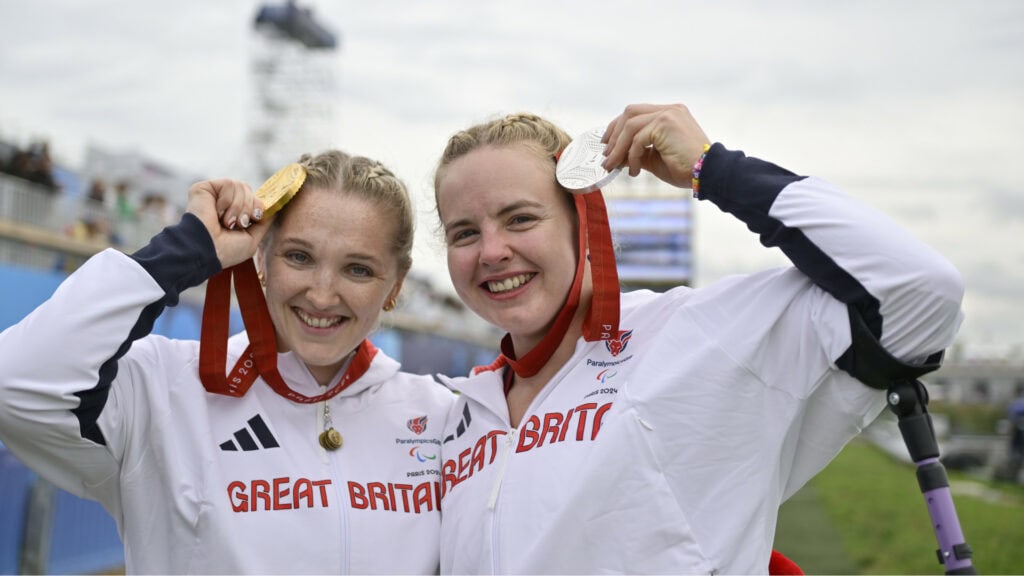
Great Britain dominated the medals table once again. Despite having no athletes in canoe sprint at the Olympics, GB brought a squad of 9 for the Paralympics: the biggest team to travel to a Games in paracanoe across any nation. Five of them would go on to win eight medals. Yep, eight medals. You read that right – they doubled up.
Charlotte Henshaw arrived at the starting line in both her canoe and kayak races as the favourite, and quickly proved expectations correct. In KL2, she lined up at the centre of a field filled with world championship medallists including her own teammate, Emma Wiggs. The starting horn went off. Just five strokes in, Henshaw took the lead. But just to her left, still in her peripherals, Katalin Varga from Hungary was keeping pace. Charlotte put in a power boost. Suddenly, Varga’s stroke changed. Her kayak was veering off course. She’d gone almost across the lane line, and had to plant her blade to take a backwards stroke to avoid crossing the buoys. Varga got back on track and put in a huge push, but it was too late. Emma Wiggs and Anja Adler had passed her for the last two podium spots behind Charlotte Henshaw.
Henshaw set a new Paralympic best time of 49.07 in her category. “Yay” Charlotte raised her fists and grinned at the camera. She held up her hand in a “V” and said jubilantly “TWO!” It was her second gold medal of the Games following VL3 the day prior. Teammate Emma Wiggs took silver, her second medal after a gold in VL2 the previous day.

The ones to watch
Brazil came out well in the men’s medals with gold and silver va’a (VL2) plus silver and bronze in kayak (KL1, KL3). The country is clearly putting a huge amount of effort into their para programme – Brazil brought a team of 17 athletes to the paracanoe world champs in April. That’s multiples more than their non-para squad, and a huge number of athletes for any country particularly considering they’re all racing singles since team boats (K2, K4, C2, C4) are not currently on the programme for paracanoe. Fernando Rufino de Paulo may be the only gold medallist for Brazil in paracanoe from this Olympics, but with such a deep bench, we can expect to see continued and increasing success for Brazilian paracanoe in the coming years.
In KL1, Peter Kiss (HUN) and Katherinne Wollermann (CHI) each dominated their finals and set new Paralympic best times of 44.55 and 51.95 respectively. Kiss was the youngest paracanoe champion ever when he won his first gold medal in Tokyo at age 18. Despite being the well-established leader in his category, his chances in Paris looked briefly questionable when he missed out on world championships earlier this year due to an injury. But Kiss managed to recover and win the selection race for his spot in a speedy 43.763. After his golden performance, Peter got to carry the Hungarian flag for the Paralympic closing ceremony. Earlier this year, he said he’s interested in trying canoe next – with the drive he’s already shown in kayak, no doubt his future is bright in canoe.
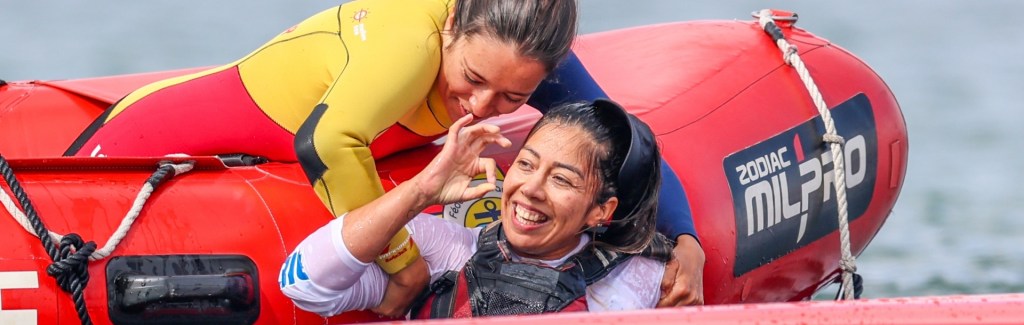
The Chilean Katherinne Wollermann has been working towards the gold for years – she won bronze in Tokyo 2020, and silvers and bronzes at paracanoe world championships in the following years. But 2024 was the year she’s been waiting for. Wollermann finally won gold at the paracanoe world championships last April before winning her first Paralympic gold medal in Paris. She might be one of the most recognisable paracanoe athletes from both her expressive face and tendency to go for a swim at the end of her races. She explained: “I have a muscle spasm when I finish the race so I always fall out of the boat. I did it in Rio, I did it in Tokyo and now in France… I love the water, it’s nice.” Wollermann is only getting faster, and at 32 years old in a sport that skews older, she could well have more gold medals in her future.
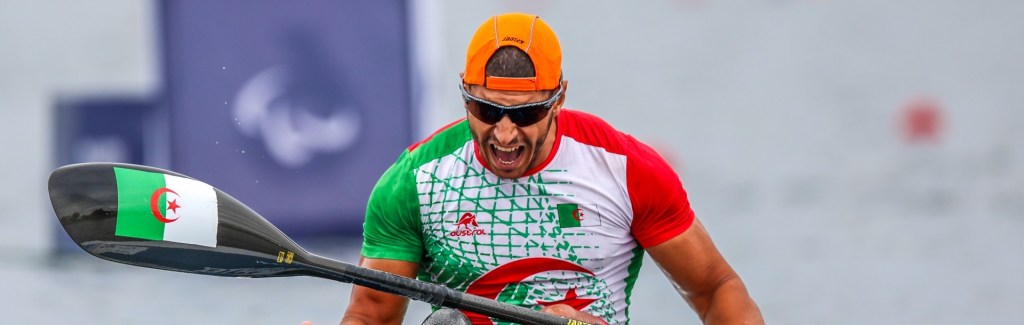
The Paralympians made history in more than just medal wins and best times though. Three countries were represented for the first time in paracanoe history: Korea, Senegal, and Algeria. Algerian Brahim Guendouz subverted all expectations in the men’s KL3. Just a few months earlier, he’d finished 9th at the paracanoe world championships in 41.58, more than a second behind Australian Dylan Littlehales and Spaniard Juan Antonio Valle Gallardo. But when it counted in Paris, Guendouz was ready. He started his race fast, and held the pace. Brahim finished in 39.91, just a tenth of a second behind the Paralympic best time (39.81) and decisively ahead of silver medallist Dylan Littlehales (40.68). Guenduoz was thrilled to win Algeria and Africa’s first paracanoe medal: “This is Algeria’s first participation and first gold medal. I know that in the next years our sport will be developed more and especially in Africa because there are a lot of good athletes over there. We have two Africans in the final and that is something to be proud of.”
What’s next
If paracanoe stays on the same trajectory of rapid growth, paddling fans around the world should start to see more paracanoe racing filter down to the national and regional levels from the increasingly robust international racing scene. The top paddlers from Paris are already starting to feel like they’ve got a target on their backs. Double gold medallist from Great Britain Charlotte Henshaw said: “We know the rest of the world are getting better and coming for us but we relish that challenge of staying in front.” GB will have to work hard to keep that dominance through LA 2028 with the rest of the world quickly catching up.
 Paddle Daily
Leave a comment